Ignitis Renewables: battery energy storage systems are the key to a secure and green future of Lithuania's energy sector
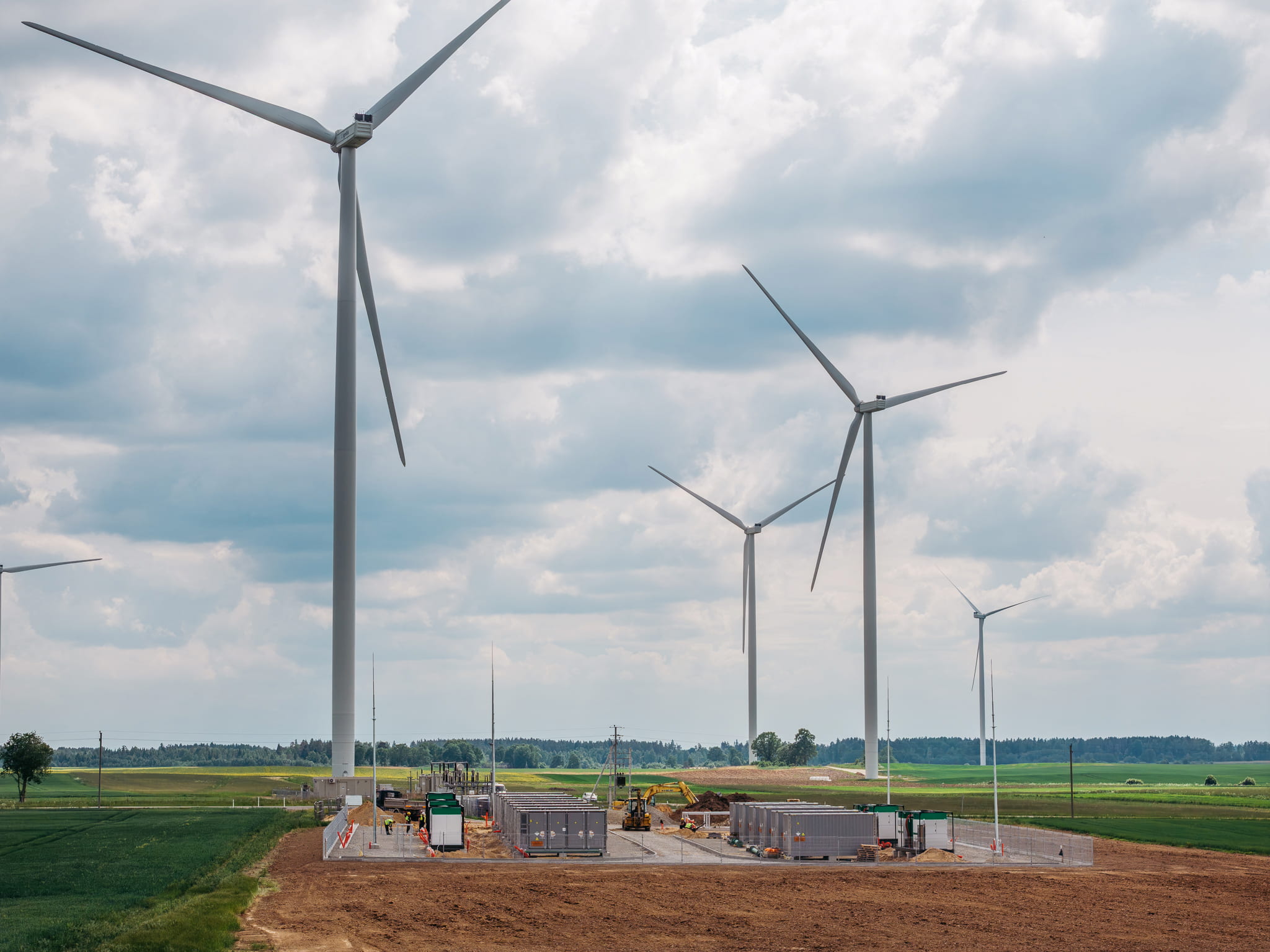
Have you ever wondered what happens when electricity generation exceeds consumption? With the rapid growth of renewables, it’s no longer enough to generate clean energy, you must ensure that it is utilised efficiently. Battery energy storage systems (BESS) play a major role here. Ignitis Renewables, an international green energy company, leading the green generation breakthrough in the Baltics, is among the first companies to develop energy storage projects at a utility scale in Lithuania. In this article, we want to introduce you to the technology.
“Storage systems are like safety cushions of electricity network. They allow to store excess energy and use it when it is needed the most. They help balance electricity generation and consumption, ensure stable supply of energy and increase the reliability of the energy system. As the number of solar and wind projects in Lithuania grows, storage systems are becoming one of the most important components of the system as they facilitate effective integration of an ever-increasing number of green capacities, reduce price fluctuations and boost energy security,” says Algirdas Dučinskas, Head of Energy Storage at Ignitis Group.
How do storage systems work?
In principle, BESS is a large-scale battery. It can take and store energy from electricity network and directly from generation sources, such as solar and wind farms. Such systems are typically installed near existing power plants after considering grid requirements and technical capabilities.
“When too much energy is generated on a sunny day or a windy night, storage systems store it. And when generation is low or consumption rises, the stored energy is released back into the grid. This is crucial during peak consumption periods in evenings or under unfavourable weather conditions, when generation from renewables decreases,” says Dučinskas.
Ignitis Group is developing three battery farms in Lithuania in total. Two of them are located near operating wind farms of Ignitis Renewables around Kelmė and Mažeikiai, and the third one is near Kruonis Pumped Storage Hydroelectric Power Plant, managed by Ignitis Gamyba. The total power capacity of the projects is 291 megawatts (MW), and storage capacity is 584 megawatt-hours (MWh). This could be compared to 130 million AA batteries as it is the most common battery in our everyday lives.
Benefiting both consumers and the energy system
Storage systems bring tangible benefits to both consumers and to the national as well as regional infrastructure. They help balanced electricity supply, prevent sudden electricity surpluses or shortages and ensure reliable access to energy.
“Additionally, storage systems allow for maximum utilisation of renewables, even when the sun doesn’t shine or wind doesn’t blow. They reduce our reliance on fossil fuel and help create a cleaner environment,” says Dučinskas.
He notes that BESS are designed to have minimal environmental impact. They are usually installed near existing infrastructure and, therefore, do not require large-scale construction works while having negligent impact on the landscape. During operation, BESS do not release pollutants into the air, water or soil. Even the sound during operation is limited, with additional sound dampening measures deployed as necessary. At the end of their life cycle, elements of the systems are recycled or disposed of in a secure manner while adhering to strict environmental requirements.
It is estimated that, by 2030, BESS capacity in Europe will increase five times. This indicates a clear trend: in the future, the energy system will also be flexible, reliable and resilient, not just green. Investments made by Ignitis Renewables are an important step towards such future. They strengthen national and regional energy infrastructure and create a sustainable energy ecosystem for all.