Solutions from students at seven universities to the challenges faced by the Ignitis Group: RECREATE has begun
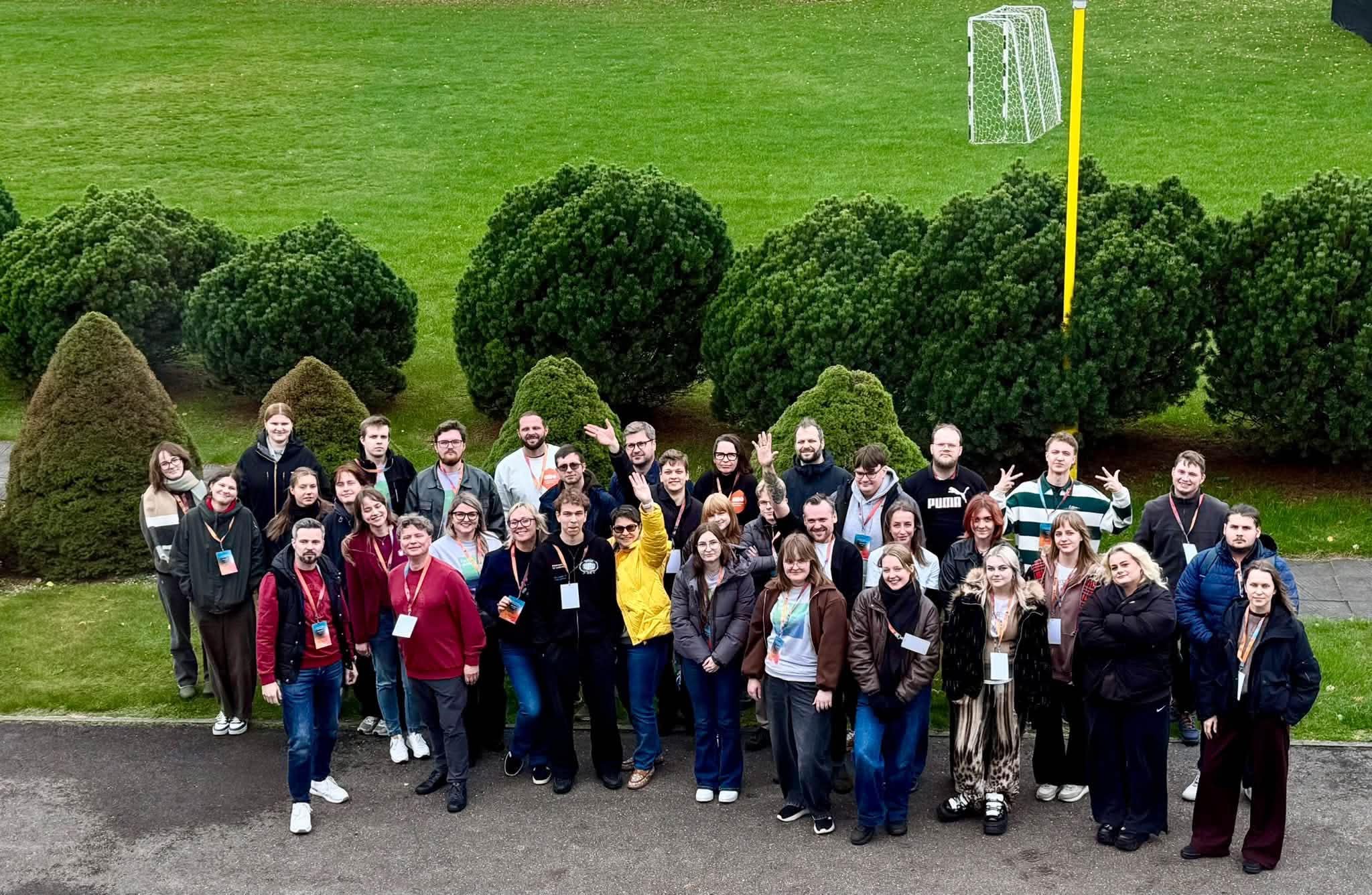
The Ignitis Group is contributing to RECREATE, a new interdisciplinary study initiative in which students from seven Lithuanian universities will seek solutions to real-world challenges facing the group’s operations. The study module ‘Rethinking Energy: Combining Research, Economics, and Technology’ (RECREATE), which began in mid-October, brings together university expertise, business experience and content from the Massachusetts Institute of Technology (MIT) MITx courses. Over the course of one and a half years, students will earn 30 ECTS credits by working in interdisciplinary teams to tackle business challenges posed by the Ignitis Group and Lithuanian Railways.
The introductory module camp, held from 14 to 16 October, marked the start of studies for the first cohort of RECREATE students. Over the course of three days, the students familiarised themselves with the study module and how they would apply the knowledge gained to tackle the tasks set by their business partners.
RECREATE combines academic knowledge, business experience and international academic content into a single study programme. For the ‘Ignitis Group’, participation in the initiative provides an opportunity to view the challenges of its operations from the perspectives of different academic disciplines, whilst enabling students to apply their knowledge in practice and gain a better understanding of the Energy sector.
Giedrė Žlibinienė, Head of the #EnergySmartSTART and RECREATE programmes at the Ignitis Group, notes: “We are developing RECREATE as an experiment that can demonstrate just how much can be achieved when universities and business not only collaborate, but jointly create the learning experience itself. We want students here to be not passive recipients of knowledge, but active solution-makers, capable of combining perspectives from technology, energy, economics, social sciences and other fields.” She adds that the launch of RECREATE is an important step in the search for new models of collaboration between higher education and business in Lithuania.
Seven universities – different areas of expertise
The following institutions are participating in the implementation of RECREATE: Kaunas University of Technology, VILNIUS TECH, Vilnius University, Vytautas Magnus University, the Vilnius Academy of Arts, Klaipėda University and Mykolas Romeris University. Their academic expertise is combined into a unified study model, in which energy challenges are examined not only from a technical perspective, but also from economic, social and environmental angles.
The modules also cover topics such as entrepreneurial thinking, the development of renewable energy infrastructure projects, smart cities and the transformation of energy systems. Such competencies will enable students to assess not only technological possibilities, but also the economic viability of solutions, their environmental impact, consumer behaviour and infrastructure requirements.
“Students will analyse how advanced data processing, monitoring and management methods can help to integrate renewable energy sources more effectively, optimise network operations and increase their resilience,” says Gintvilė Šimkonienė, Vice-Dean for Research and International Relations at Klaipėda University. The co-developer of the module notes that this approach creates a platform for future specialists to acquire the skills needed to develop smart, sustainable and reliable energy systems of the future.
The course content will be supplemented by four MITx courses. Their material is integrated into the modules taught at Lithuanian universities and linked to practical assignments. Students who fulfil the course requirements will be able to obtain MITx certificates.
The module also strongly reflects the culture of interdisciplinarity that MIT, as a partner, has fostered for many years. In the 2025 Times Higher Education Interdisciplinary Research Ranking, MIT took first place amongst 749 higher education institutions from 92 countries. Interdisciplinarity enables a single problem to be analysed by drawing on a range of disciplines – from the physical and social sciences to computing, engineering, art and design. This ensures a broader range of skills in both academic and, subsequently, professional settings.
“Ignitis Group” challenges – applying knowledge in practice
“Ignitis Group”, as one of RECREATE’s business partners, presents students with challenges from its own operations. By analysing these, interdisciplinary teams will be able to link academic knowledge to real-world business situations and assess the applicability of different solutions. Practical tasks are also provided to programme participants by Lithuanian Railways.
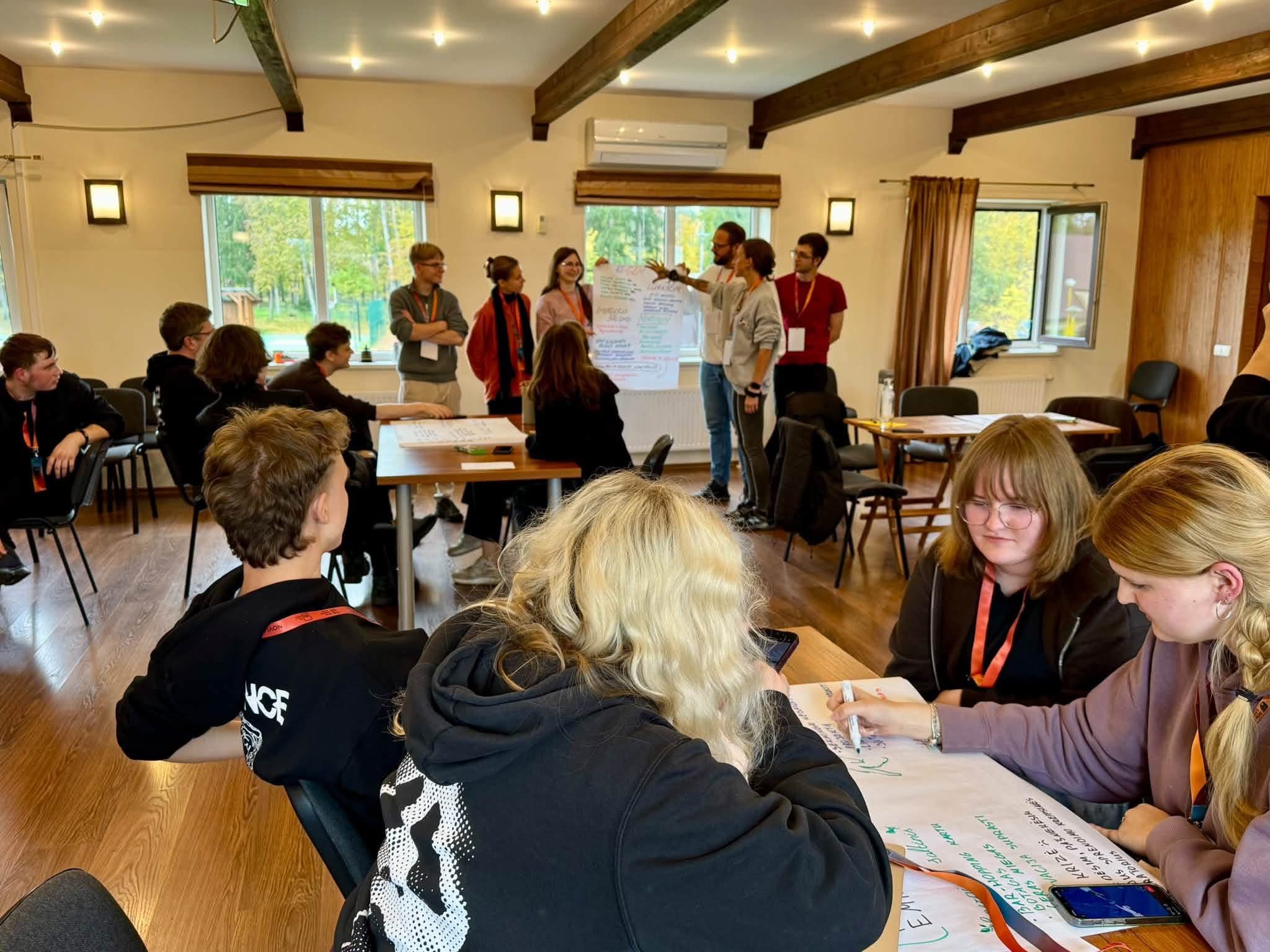
The interdisciplinary teams will work on tasks set by the business partners, with guidance from lecturers and experts. “By applying design thinking methods, students will learn to identify problems, generate ideas, create prototypes, test them and refine them systematically,” says Assoc. Prof. Dr Osvaldas Stripeikis, head of the ‘Minded Entrepreneurship Academy’ at Vytautas Magnus University.
Augusta Poškienė, a participant and student at Vytautas Magnus University, speaks about the growing demand for programmes such as RECREATE. According to her, she chose the programme to gain new knowledge, meet specialists in her field and gain experience of teamwork whilst implementing a larger-scale project. Augusta believes that the opportunity to work in a team and explore new fields is an important part of her future professional experience.
The project is organised by institutions within the Lithuanian consortium: Kaunas University of Technology, VILNIUS TECH, Vilnius University, Vytautas Magnus University, Vilnius Academy of Arts, Klaipėda University and Mykolas Romeris University, as well as “Ignitis Group”, “Novian” and Lithuanian Railways.
About the Lithuanian consortium and its collaboration with MIT
The RECREATE initiative arose from a partnership between the Lithuanian consortium – of which “Ignitis Group” is a member – and the Massachusetts Institute of Technology (MIT). The Lithuanian consortium brings together 14 Lithuanian scientific and business institutions seeking to collaborate with MIT. A cooperation agreement signed in January 2025 with the MIT Centre for International Studies became one of the cornerstones of this partnership.
MISTI Lithuania is part of MIT’s programme for international science and technology initiatives, which aims to strengthen ties between Lithuania and MIT in the fields of science, studies, technology and innovation. The collaboration encompasses the initiation of joint research projects, the exchange of knowledge, and opportunities to enhance the skills of students and early-career researchers.
The Lithuanian consortium is coordinated by Vytautas Magnus University, and its activities are supported by the Lithuanian Science Council.